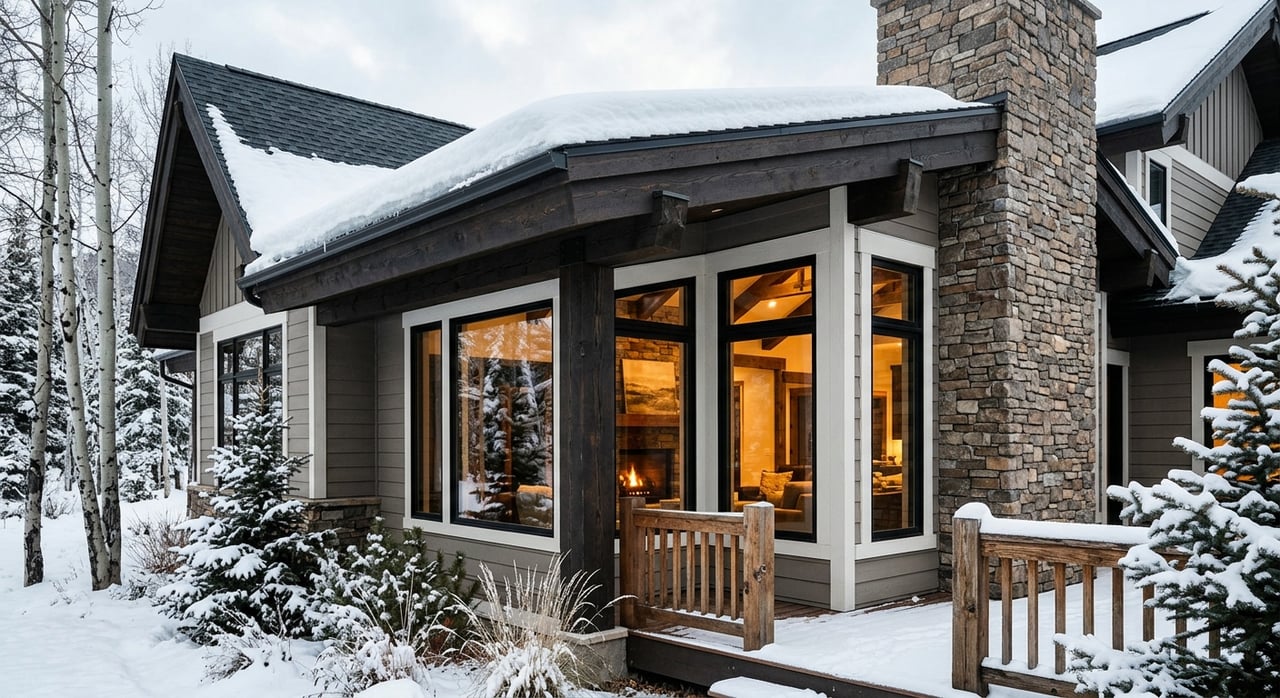
Thinking about going new in Steamboat’s Mountain Area? That choice can look simple at first, but in this part of 80487, buying a finished home and building from the ground up can lead to very different timelines, costs, and day-to-day ownership realities. If you want ski-area access, mountain design, and possible rental flexibility, it helps to understand how planning rules, winter conditions, and site constraints shape the outcome. Let’s dive in.
Why the Mountain Area stands apart
Steamboat’s Mountain Area is not just another pocket of housing near the resort. The City’s Mountain Area Master Plan treats this corridor as a long-term center for recreation, housing, hospitality, commerce, and mobility improvements. That matters if you are buying or building here, because you are stepping into an area that is still evolving.
The city also identifies economic vitality, identity, and access and mobility as major themes for the area. In practical terms, that helps explain why buyers keep focusing on this part of Steamboat and why new residential and mixed-use projects continue to draw attention. It is a resort-centered district with long-range planning behind it.
The plan also makes clear that change can come through capital projects, code and policy adjustments, private investment, and partnerships. So if you are comparing a resale, a finished new home, or a vacant lot, it is smart to think beyond the house itself. You are also buying into an area where infrastructure, access, and development patterns may continue to shift over time.
Wildhorse Meadows is one example of the kind of mountain-area product buyers often have in mind. It is a named resort neighborhood on Bangtail Way in 80487, and the resort describes it as having gondola access to Steamboat Square at the base area. That kind of access helps show why the Mountain Area has its own appeal and its own pricing logic.
Buying new vs building new
For many buyers, the first decision is whether you want a completed property or a custom project. Both paths can work, but they come with different tradeoffs in control, timing, and risk. In Steamboat’s Mountain Area, those differences can be more pronounced because of terrain, snow, and local review requirements.
Why buying finished can be easier
Buying finished new construction can give you more certainty. You can evaluate the floor plan, garage access, storage, rooflines, and site function before you close. That is especially helpful in a mountain setting, where winter performance matters just as much as interior finishes.
A completed home can also reduce the number of unknowns tied to permitting and design coordination. Instead of managing plan revisions, site engineering, and department reviews, you are focusing on the final product and how it fits your lifestyle or investment goals. For second-home buyers and out-of-town owners, that simplicity can be a real advantage.
Why building custom can be worth it
Building from scratch gives you more control over layout, views, materials, and long-term use. If you have a specific vision for a mountain home, or you want to tailor a property for seasonal living, rental use, or multigenerational visits, custom construction may offer more flexibility.
That said, custom building in Routt County is rarely just about picking finishes. The lot itself can shape engineering, snow management, roof design, driveway placement, and review timelines. A site that looks great in summer may present very different challenges once snow season arrives.
What the permit process means for you
In Steamboat Springs, building and permit review is handled by the Routt County Regional Building Department. The department serves both the City of Steamboat Springs and the rest of the county, and permit submittals are handled electronically through CityView. Paper submittals are not accepted.
For new construction and additions, the initial plan review may take up to 10 business days. Resubmittals and addenda typically take 5 to 7 business days. Those time frames are useful, but they do not always tell the whole story.
The review process can also involve planning, water and sanitation, environmental health, fire, GIS, engineering, and utility review. When several departments need to weigh in, timelines can extend beyond the initial review window. If you are building on a mountain lot, it is smart to budget time for coordination, revisions, and site-specific questions.
Site plans matter more than many buyers expect
In this market, site-plan requirements are a major part of the process. Routt County requires site plans for new single-family homes, new multifamily projects, new garages and detached structures, driveway modifications, grading work, and other improvements that affect public utilities or the public right-of-way.
That means the lot is not just a backdrop for the home. Drive access, grading, utility relationships, and snow-storage areas can all affect what gets approved and how practical the site will feel in daily use. A beautiful parcel still needs to function well in real mountain conditions.
Some lots require more engineering
Not every custom home needs an architect or engineer for every issue, but some sites clearly require more technical work. Routt County says residential homes may need architect or engineer involvement when soils show swell potential or when basements or retaining walls exceed certain thresholds. The department may also ask for structural calculations or an engineer’s design during review.
This is one reason hillside or irregular lots deserve careful evaluation before you commit. What looks like a straightforward build site can bring added design and construction complexity. In the Mountain Area, those details can affect both your budget and your schedule.
Design for snow first
In Steamboat, winter is not a side note. NOAA’s 1991 to 2020 normals for the Steamboat Springs station show an annual mean temperature of 40.8 degrees Fahrenheit and an annual snowfall mean of 184.5 inches. The city’s winter maintenance page also says winter typically runs from November to April and that city crews manage an average of 300 inches of snowfall per year on city streets.
For buyers and builders, that means design decisions should start with snow performance. A home that looks great on paper can become frustrating if the driveway is awkward, garage access is tight, or snow storage was treated as an afterthought. In this market, ease of winter living adds real value.
Snow storage is a real design requirement
The city expects property owners to manage winter impacts on site. Snow from private property and adjacent sidewalks must be stored on private property, not in the street, and sidewalk snow removal is the adjacent owner’s responsibility. The city also notes that driveway windrows during plowing are normal and that pushing snow into the roadway is prohibited.
The Community Development Code adds specific snow-storage standards. It requires about 1 square foot of snow-storage area for every 2 square feet of paved area, generally within 20 feet of the pavement being served. In limited cases, alternative locations, snowmelt systems, or off-site hauling may be allowed.
This is why lot choice should account for more than slope and views. Flat usable area, driveway placement, garage access, retaining walls, and room for snow storage all affect how a property lives after the first major storm. These are practical details that can make a big difference in your ownership experience.
Ground snow load is site specific
Ground snow load is not a uniform assumption in Routt County. The city’s permit guidance says applicants must use the county’s ground snow load map to identify the value for the specific site. That is another reason custom building in the Mountain Area is highly lot dependent.
If you are comparing multiple parcels, this can be an important part of your due diligence. Site-specific snow load affects structural planning and should be understood early. It is one more example of how mountain construction decisions start with the land itself.
Plan early for solar-ready roofs
Sun exposure and roof form also matter in new construction. Routt County says it adopted the 2021 ICC code set and portions of the Colorado Model Electric and Solar Ready Code effective January 1, 2024. The city ordinance requires many new residential buildings with at least 600 square feet of roof area oriented between 110 and 270 degrees of true north, or with low-sloped roofs, to reserve a 300-square-foot solar-ready zone, with a smaller exception for some small townhomes.
For you as a buyer or builder, this affects more than future solar panels. Roof geometry, mechanical placement, and reserved panel space should be considered early in design. Waiting until late in the process can create avoidable revisions or compromises.
Wildfire resilience is becoming standard
Wildfire planning is also becoming part of the new-build conversation in Steamboat. The city announced that the Colorado Wildfire Resiliency Code will take effect on July 1, 2026. It said many new residential and commercial projects will need wildfire-resistant materials, defensible-space practices, and vegetation-management documentation at submittal.
If you are building new, that makes exterior planning even more important. Material choices, landscape planning, and site documentation may all play a larger role going forward. It is wise to think of wildfire resilience as part of the build strategy, not a later add-on.
Rental rules can shape value
In the Mountain Area, short-term rental eligibility can be a major factor for second-home buyers and investors. The city’s short-term rental overlay creates three broad categories: Zone A, where short-term rentals are unlimited; Zone B, where short-term rentals are capped by subzone; and Zone C, where short-term rentals are prohibited. The exact parcel matters.
That means you should verify the property’s overlay status before you rely on rental income assumptions. Two homes in the same general area can fall under very different rules. In a resort market, that can have a direct effect on both use and value.
STR licenses do not automatically transfer
The city says short-term rental licenses do not transfer automatically with a sale, and there is no grandfather clause for licensing. New owners must apply for a license in their own name before operating a short-term rental. The city also notes that legal nonconforming status runs with the land if it has not been abandoned.
This is an important point for buyers reviewing marketed rental history. A property may have operated as a short-term rental under a prior owner, but that does not mean you can simply continue under the same license. Your due diligence should focus on current overlay status, licensing path, and operating requirements.
Parking and operations still matter
The city also regulates occupancy, parking, and local contact requirements for licensed short-term rentals. Parking must be on an all-weather drivable surface, and vehicles cannot park in public rights-of-way or emergency access easements. Licensed rentals must also maintain a designated local responsible party who responds to complaints within one hour.
HOA rules may be stricter than city rules. So if rental use is part of your plan, the best property is not always the one with the nicest finishes. It is the one where zoning, parking layout, winter operations, and building rules work together.
How to choose the right path
If you want convenience, speed, and fewer unknowns, a finished new home may be the better fit. You can see how the site handles access, parking, storage, and snow before you buy. That can be especially valuable if you are purchasing a second home or want a cleaner path to near-term use.
If you want control, customization, and a home designed around your exact priorities, building may be worth the extra effort. But in the Mountain Area, success usually comes from understanding the lot first, then designing for snow, access, code requirements, and any rental goals from day one.
This is where local knowledge matters. In a market like Steamboat, buying or building new is not just a style decision. It is a project decision, and the best outcomes usually come from clear due diligence, realistic budgeting, and a practical view of how the property will function in every season.
If you are weighing a new-construction purchase, a land opportunity, or a custom build near the resort, Will Kennish’s team @thegrouprealestate can help you evaluate the tradeoffs with a local, construction-aware lens. Make the Move. Live the Dream.
FAQs
How long does permitting take for new construction in Steamboat Springs?
- The Routt County Regional Building Department says initial plan review for new construction and additions may take up to 10 business days, while resubmittals and addenda typically take 5 to 7 business days. Additional department reviews can extend the timeline.
Do mountain-area lots in Steamboat Springs need engineering review?
- Sometimes. Routt County says soils with swell potential, larger basements, retaining walls above certain thresholds, or structural complexity can trigger architect or engineer involvement and may require structural calculations or engineered designs.
Can you use any Mountain Area property in Steamboat as a short-term rental?
- No. The city’s short-term rental overlay includes Zone A, Zone B, and Zone C, and the rules differ by parcel. Buyers should verify the exact property’s overlay status and licensing path before assuming nightly rental use is allowed.
Does a Steamboat short-term rental license transfer to a new owner?
- No. The city says short-term rental licenses do not automatically transfer with a sale, and new owners must apply for a license in their own name before operating a short-term rental.
What design issues matter most when building in Steamboat’s Mountain Area?
- Key issues include snow storage, driveway and garage access, site grading, roof orientation, solar-ready planning, site-specific ground snow load, and future wildfire-resilient exterior and vegetation planning.
Why is buying or building near Steamboat Resort different from other areas in 80487?
- The Mountain Area is guided by a long-term master plan focused on recreation, housing, hospitality, commerce, and mobility. It is an evolving resort corridor, so planning, access, and future development patterns can play a larger role in value and day-to-day use.