You want your Steamboat base-area condo to shine the moment guests step in. Between city licensing, HOA approvals, and the realities of snow, gear, and quick turnarounds, it pays to get a clear, local plan. In this guide, you’ll learn what to confirm with the City and your HOA, which upgrades stand up to mountain use, and how to streamline operations so you protect reviews and future resale. Let’s dive in.
Important note: Owners must confirm STR eligibility, taxes, and physical or HOA approvals with the City of Steamboat Springs, their HOA, and licensed contractors before making changes.
Confirm STR licensing first
If you plan to offer short-term stays, start with the City of Steamboat Springs. The City requires an STR license to advertise, offer, or operate a short-term rental within city limits. Begin with the City’s application process and licensing guide, submitted through the CityView portal, and review the required documents like the Self-Inspection Checklist and Parking & Snow Storage Plan. These items are not optional, and snow storage is enforceable, so plan your guest instructions and site layout around it. You can find the steps in the City’s STR licensing page.
The City also uses an STR Overlay Zone that controls eligibility and caps in certain neighborhoods. Use the interactive map and lottery rules to confirm whether your address can receive a non-hosted STR license before you invest in upgrades. Review operational rules that apply to licensed STRs, including occupancy limits, all-weather parking requirements, visible posting of your license and the City’s Notice of STR Rules inside the unit, and maintaining a local responsible party who can respond to complaints within one hour. You can review these details on the City’s Rules and Regulations page.
- Start your application and read the requirements on the City’s STR licensing page: Licensing for Short-Term Rentals
- Confirm your overlay zone and rules: Rules and Regulations
- Download and post the City’s notice in your condo: Notice of STR Rules
Taxes and remittance
Steamboat Springs has combined sales and accommodations taxes, and the City documents an STR tax that applies to short-term stays. You must register and remit the local and state taxes as required. Do not assume a marketplace is remitting correctly on your behalf. Verify your obligations on the City’s Municipal Tax page and align your booking platform settings and accounting process accordingly. See the City’s guidance here: Municipal Tax for Steamboat Springs.
Always confirm your licensing and tax status with the City before accepting bookings.
Check HOA rules and permitting
Before you add a ski rack, owner closet, or smart lock, review your building’s covenants and rules. Many condo associations are equal to or more restrictive than City regulations, and anything that touches common areas or shared systems typically requires written approval. The City explicitly reminds owners to check HOA rules because noncompliance can be enforced. Start by reading your CC&Rs and building policies, and get approvals in writing.
If you plan to alter egress hardware, electrical, mechanical, or anything that affects fire or building safety, contact the Routt County Regional Building Department. Routt County provides permitting services for the City of Steamboat Springs. Expect plan review for changes to exits, wiring, or shared components, and contact the department early to align timelines. Learn more here: Routt County Regional Building Department.
If you are buying a unit, remember that STR licenses do not automatically transfer with a sale. Confirm reissue rules in the City’s licensing FAQ and do not assume your purchase includes a transferrable STR license. Always confirm with the City, the HOA, and your contract team.
Design for mountain conditions
Steamboat is a high-elevation resort with a multi-hundred-inch seasonal snowpack. The resort’s 10-year mid-mountain average sits around 314 inches. That means guests bring wet boots, skis, and bikes through your entry, and your finishes should be ready for water, salt, and abrasion. Keep your materials durable and easy to clean.
Reference: Steamboat Resort mountain stats
Flooring that works
Waterproof, scratch-resistant flooring is your first line of defense. Rigid-core LVP or SPC holds up well in traffic paths, and porcelain tile at the entry or mud area is a proven choice. National data shows a wide installed cost range for LVP depending on quality, which is helpful for budgeting. Use a durable wear layer and, in high-traffic corridors, consider commercial-grade products. For planning, see this market reference: Vinyl flooring cost overview.
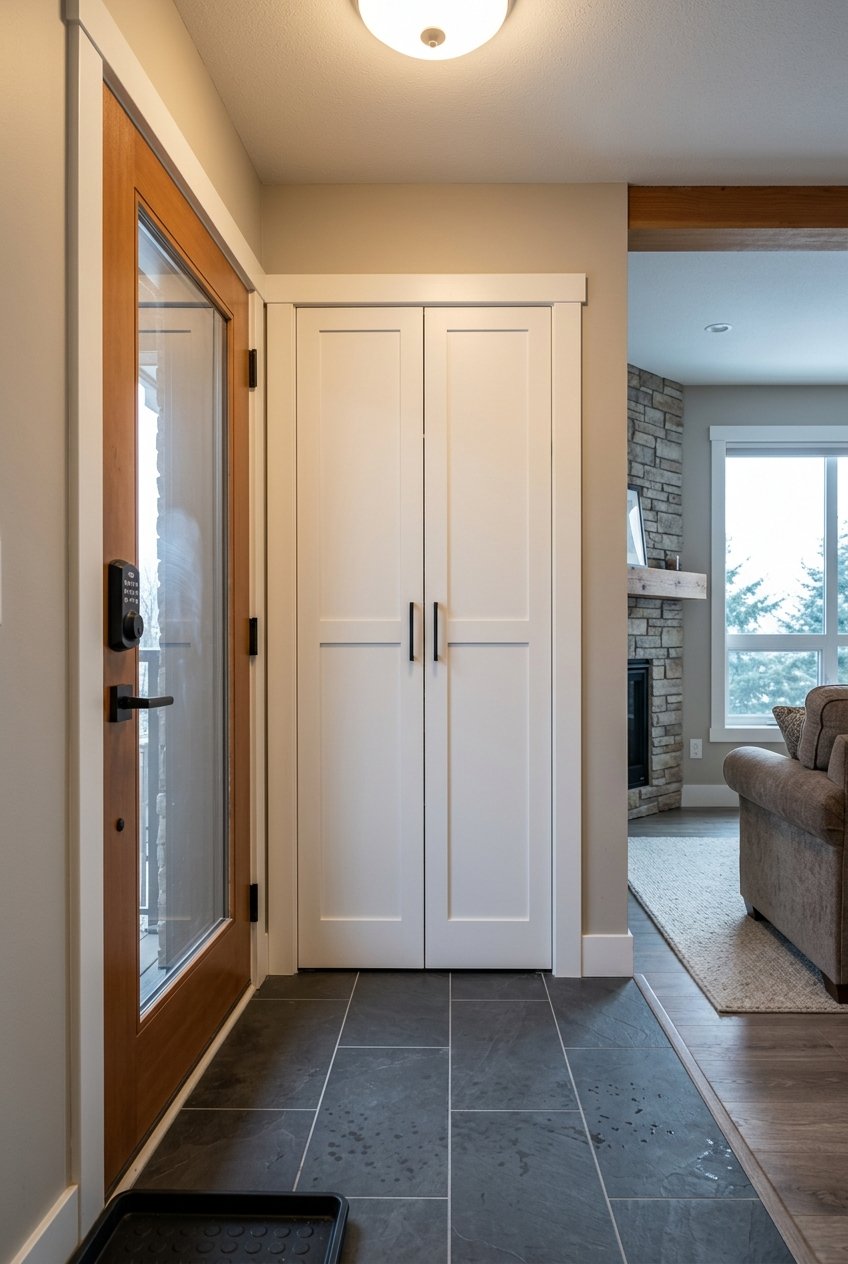
Define a mud zone near the entry with a removable runner, a metal or porcelain tray for boots, and a washable area rug in the living room. If your HOA allows, a compact bench with storage and a waterproof base reduces dirt migration and improves guest satisfaction.
If radiant heat is possible under an entry or mudroom tile, it boosts comfort and speeds drying. Confirm electrical and plumbing capacity with licensed trades and check permit and HOA requirements before installing. Learn more about warm, durable mudroom flooring options here: Mudroom and flooring guidance.
Durable counters and paint
Choose low-maintenance counters like quartz or similar nonporous engineered stone, and use semi-gloss trim paints for easy wipe-downs. Avoid porous natural stones in heavy-use rentals unless you commit to a sealing schedule.
Furniture, textiles, and bedding
Performance fabrics resist stains and odors, turn cleanups faster, and hold up to repeated use. Look for names like Crypton in living and sleeping areas. For bedding, choose commercial-grade white or neutral linens and use mattress protectors to extend lifespan and simplify laundry.
- Fabric reference: Crypton performance fabrics
Ski and bike storage
Guests expect an obvious place to stage gear. Provide a boot bench and tray, labeled ski hooks or a low-profile wall rack, and a well-ventilated spot if you can. If your building has common ski lockers, coordinate with management on labeling and instructions for guests. For bikes, use space-efficient vertical hooks or a slim floor rack where allowed. Never obstruct hallways. Many corridor or storage changes require written HOA approval, so confirm rules before buying fixtures. See the City’s reminder to check HOA restrictions: Rules and Regulations.
Provide a safe boot-drying option. If you add a powered dryer, verify electrical capacity and whether a permit or HOA sign-off is required.
Entry access and life safety
Keyless entry makes self check-in smooth. Smart deadbolts or secure lockboxes reduce late-night friction and let you rotate access codes between stays. If you retrofit a lock, keep life safety in mind. Any egress door must allow occupants to exit without a key or special knowledge. Double-cylinder deadbolts are not acceptable. Confirm that your lock model and installation meet local life-safety and fire rules, and consult the building official or fire marshal if unsure. Reference: Life safety code context for egress hardware.
Always verify egress hardware compliance with the City, your HOA, and a licensed locksmith or contractor before installation.
Operations that protect reviews and resale
Required postings and safety
Post your STR license and the City’s Notice of STR Rules inside the unit. The notice covers maximum occupancy, parking rules, 24-hour local contact, and trash procedures including bear-resistant containers. Keep these documents visible and up to date. Download the notice here: Notice of STR Rules.
Install and test smoke and carbon monoxide detectors. Colorado requires these alarms, and proper placement and power source matter. Verify the current requirements with the City or a licensed electrician and treat detector upgrades and escape routes as first-priority items.
Local responsible party
Your STR license requires a designated local responsible party who can respond to complaints within one hour. If you manage remotely, budget for a local contact or service to meet this standard. See the City’s reminder here: Rules and Regulations.
Trash, recycling, and wildlife
The City requires bear-resistant containers or approved enclosures for any refuse left outside. That affects where you store bins and how you write guest instructions. Include a photo of the correct bin location and a simple trash and recycling schedule in your house manual. Reference the City’s notice: Notice of STR Rules.
House manual and cleaner standards
Create a concise house manual that covers check-in and check-out, parking and snow storage notes, local contact info, and simple appliance instructions. Place a short printed copy on a clipboard inside the unit and keep a digital version in your booking messages. If you work with cleaners or a property manager, use checklists and request photo proof of condition after each stay. Include items like vacuuming, spill wipe-downs, smoke and CO detector checks, and pet hair removal.
Project plan you can follow
Start with approvals, then move to high-impact upgrades, and finish with operations. Timelines depend on permit and HOA schedules, so build in buffer time.
Phase 0: Before any work
- Confirm your address is eligible for non-hosted STR in the overlay map and start license paperwork early. See: Rules and Regulations.
- Read HOA documents for owner closets, storage, door hardware, and corridor fixtures. Obtain written HOA approvals where required.
- If you will alter electrical, mechanical, or exit hardware, contact the Routt County Regional Building Department about permits and plan review: Routt County Building.
Phase 1: Safety and compliance, weeks 0 to 2
- Install or test smoke and CO detectors. Post the STR license when issued and display the City’s notice inside the unit. Use clear, current contact info.
- Draft a house manual and include photo instructions for trash and recycling with a reminder about bear-resistant containers. Provide a guest arrival checklist.
Phase 2: High-impact guest upgrades, weeks 2 to 8
- Upgrade or protect entry flooring with waterproof materials like rigid LVP or porcelain tile. Use national cost ranges as a budgeting reference, then get local bids: Vinyl flooring cost overview.
- Add labeled storage for skis, boots, and bikes. If allowed, install a compact bench and wall-mounted ski rack. Confirm any corridor or common-wall work with the HOA first.
- Install a smart lock or secure lockbox for self check-in, but verify that egress hardware remains code compliant.
- Swap soft goods for performance fabrics and upgrade linens to neutral, commercial-grade sets with mattress protectors.
Phase 3: Operational readiness, ongoing
- Line up a local cleaner with a turnaround checklist and decide on laundry flow, whether on-site or off-site.
- Create communication templates for booking confirmation, check-in, trash guidance, and check-out. Document emergency contacts and damage resolution steps.
- Keep the one-hour local responder requirement in place and monitor guest messages for timely responses.
Owner prep checklist
Use this quick list to stay on track. Print it and check items off as you go.
- Verify STR eligibility on the City’s overlay map and start your license application.
- Register for all required taxes and confirm how you will remit.
- Read HOA rules and secure written approvals for any physical changes.
- Contact the Building Department before changing egress, electrical, or mechanical systems.
- Post the STR license and City notice inside the unit and confirm occupancy and parking rules.
- Install or test smoke and CO detectors and confirm placement with a licensed electrician.
- Upgrade entry flooring or add protective mats and a boot tray.
- Set up ski and bike storage and confirm any common-area impacts with the HOA.
- Install a smart lock or lockbox that preserves simple egress.
- Finalize the house manual, cleaner checklist, and take fresh listing photos.
What buyers expect in base condos
Turnkey, low-maintenance finishes and obvious, secure storage for ski and bike gear are top of mind. Buyers and guests also expect clear house rules and a reliable local contact who responds quickly. For resale, keep a clean paper trail that shows HOA approvals, permits, invoices, and a compliant STR license history if you rent the unit. This documentation reduces friction when you decide to list.
Get local help
If you want a pragmatic plan to get guest-ready or buyer-ready, leverage a local advisor with construction fluency and a project mindset. From cost estimates and vendor coordination to staging and listing strategy, you can move faster and protect value with the right team. Ready to align your condo with Steamboat’s rules and guest expectations? Reach out to Will Kennish. Make the Move. Live the Dream.
FAQs
What does Steamboat require to operate an STR?
- You need an STR license, compliance with overlay zone eligibility, posted rules inside the unit, and a local responsible party who responds within one hour; confirm details on the City’s licensing and rules pages.
Do I need a snow storage and parking plan?
- Yes, the City requires a Parking and Snow Storage Plan as part of licensing, and it is enforceable, so include clear guest instructions and site logistics in your setup.
What flooring stands up to snow and boots?
- Waterproof, scratch-resistant options like rigid LVP or porcelain tile perform well in entries and traffic paths; use national cost ranges to budget, then get local bids.
How should I handle trash and wildlife rules?
- The City requires bear-resistant containers or enclosures for any refuse left outside; include clear, photo-based instructions in your house manual and post the City’s notice inside the unit.
Do STR licenses transfer when I buy a condo?
- Not automatically; the City outlines specific reissue rules and exceptions, so always confirm transferability during contract and do not assume a sale includes a license.